

Digitization of the Old Record Books – Unlocking the History of Šiauliai Courts
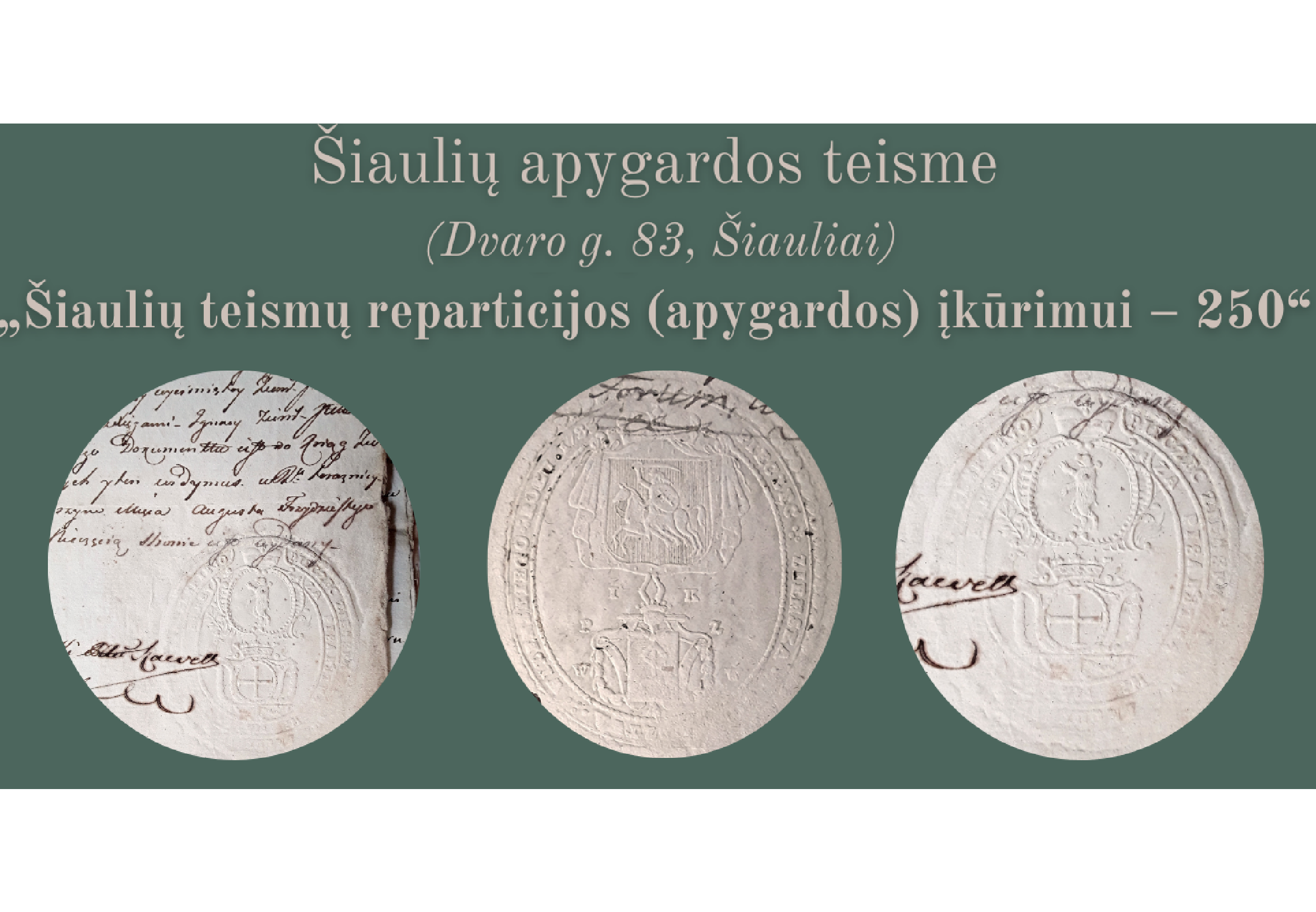
In preparation for the 250th anniversary of the Šiauliai Repartition Courts, the Lithuanian State Historical Archives (LSHA) has launched an important project – the digitization of the Old Record Books. This is one of the most valuable complexes of Lithuania’s documentary heritage, containing records from institutions of the Grand Duchy of Lithuania (GDL) from the 16th to 18th centuries.
Currently, LSHA preserves more than 15,000 Old Record Books, ranging from a few dozen to over 3,000 pages each. These documents occupy over 560 meters of shelving, and the majority of the files have original leather covers. Digitization will help preserve these historically important documents and make them widely accessible to researchers, historians, and the general public.
In the context of Šiauliai court history, these Old Record Books are particularly significant. They reveal the development of the Šiauliai legal system in the second half of the 18th century, during which the Šiauliai Castle, Land, and Pakamario Courts, the Šiauliai Repartition Court of the Samogitian Duke’s Confederation, the Šiauliai Magistrate Court, and the Treasury Commission of the Grand Duchy of Lithuania were active. A separate part of the exhibition focuses on the Kaunas Governorate Orphans’ Court in Šiauliai, which operated under the Russian imperial administration.
In 2025, these documents will be presented at the Court History Museum of the Šiauliai District Court, where an exhibition dedicated to Šiauliai courts from 1775 to 1940 will open. The exhibition will run from October 7, 2025, to January 1, 2026.
The digitization of the Old Record Books is a step into the future, making centuries-old cultural heritage accessible to everyone. The documents are available in the EAIS digital reading room, and more information about the project and the digitized documents can be found here (information in Lithuanian language). This is an invitation to explore Lithuania’s history not only in archive repositories but also online – where the past becomes accessible, researchable, and preserved for future generations.
Last updated: 07-10-2025
Related news:
International Exhibition “Martynas Liudvikas Rėza”
Minister of Foreign Affairs Kęstutis Budrys Visits the Lithuanian State Historical Archives