

The Lithuanian State Historical Archives’ digital document collection has been expanded with 143 files relating to collective farms in the Kėdainiai District
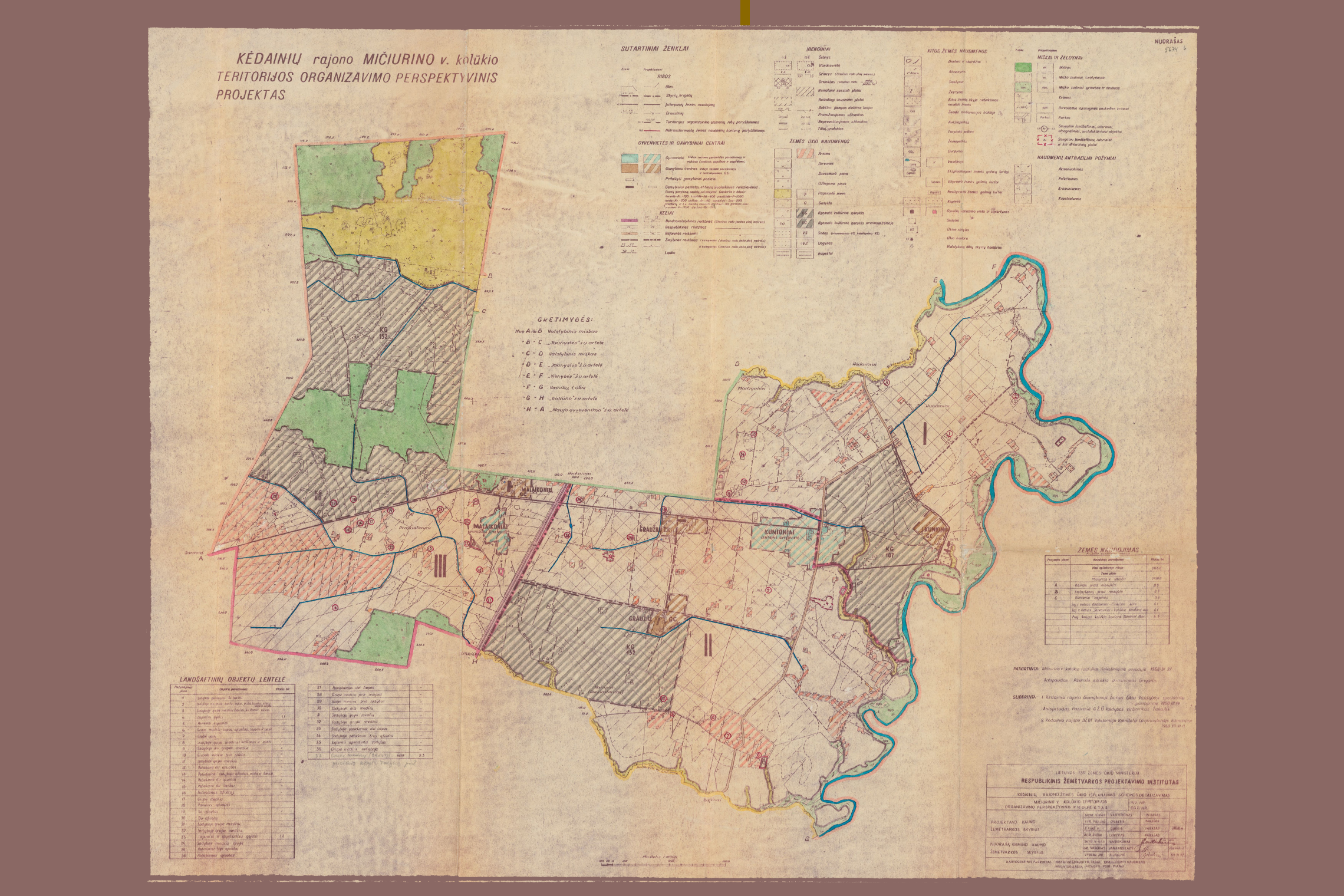
In cooperation with the Kėdainiai Regional Museum, the Lithuanian State Historical Archives has expanded its digital document collection with copies of files and plans (maps) relating to prospective development plans for collective farms in the Kėdainiai District (1968–1972) and forestry districts (1983–1984), including copies of prospective land-use planning projects and territorial plans, totaling 143 items. This collection is now available to researchers through the Electronic Archives Information System (EAIS).
The files and maps are particularly interesting for several reasons. Following the post-war partisan war, the mass deportations to Siberia, and the forced relocation of rural residents into collective farm settlements (a process known as melioration), the Republican Land Management Design Institute of the Ministry of Agriculture of the Lithuanian SSR prepared prospective development plans for collective farms in 1968–1972. Not all of these plans were destined to become reality. Particularly interesting is the forecast of the region’s negative demographic outlook through 1990 – Distribution of the Rural Population of Kėdainiai District in 1974 and Forecast for 1990 by Farms and Settlements. The files contain information about the history of agricultural cooperatives, collective farms, and experimental farms, including their forced establishment, development, consolidation, farm headquarters and subsidiary settlements, production centers, changes in farm names, and economic indicators. The maps prepared alongside the prospective development plans indicate the locations and names of settlements and former manor sites, forests, bodies of water, hills, and other geographical features. In some cases, older forms of place names are also recorded, together with the dates of the documents in which they appear. The maps also identify natural and cultural heritage sites that were to be protected, as well as those that had already been destroyed. Although produced during the Soviet period, this documentary record is extremely important for understanding the region.
We would like to thank Vaidas Banis, Chairman of the Kėdainiai History and Culture Club and staff member of the Kėdainiai Regional Museum; Rytas Tamašauskas, member of the Kėdainiai History and Culture Club and editor of the website dotnuviai.lt; Viktor Kotvicki, Daiva Botyrienė, and Jolanta Puodžiūnienė, staff members of the Lithuanian State Historical Archives; Vilnius University Faculty of History students and archival interns Aistė Kuodytė and Kaja Grican, for their assistance in preparing the archival inventory; Rimantas Žirgulis, Director of the Kėdainiai Regional Museum; Virgilijus Morosas, Director of the Vilnius Regional State Archives, and its staff member Justinas Žakauskas, for digitizing the plans; and Juozas Markauskas, Vice-President of the Baltic Audiovisual Archival Council, for preparing a sample of the plans’ metadata based on the Kunioniai example.
Last updated: 26-10-2026
Related news:
International Exhibition “Martynas Liudvikas Rėza”
Minister of Foreign Affairs Kęstutis Budrys Visits the Lithuanian State Historical Archives