

The Lithuanian State Historical Archives Launches a Major Digitisation Project
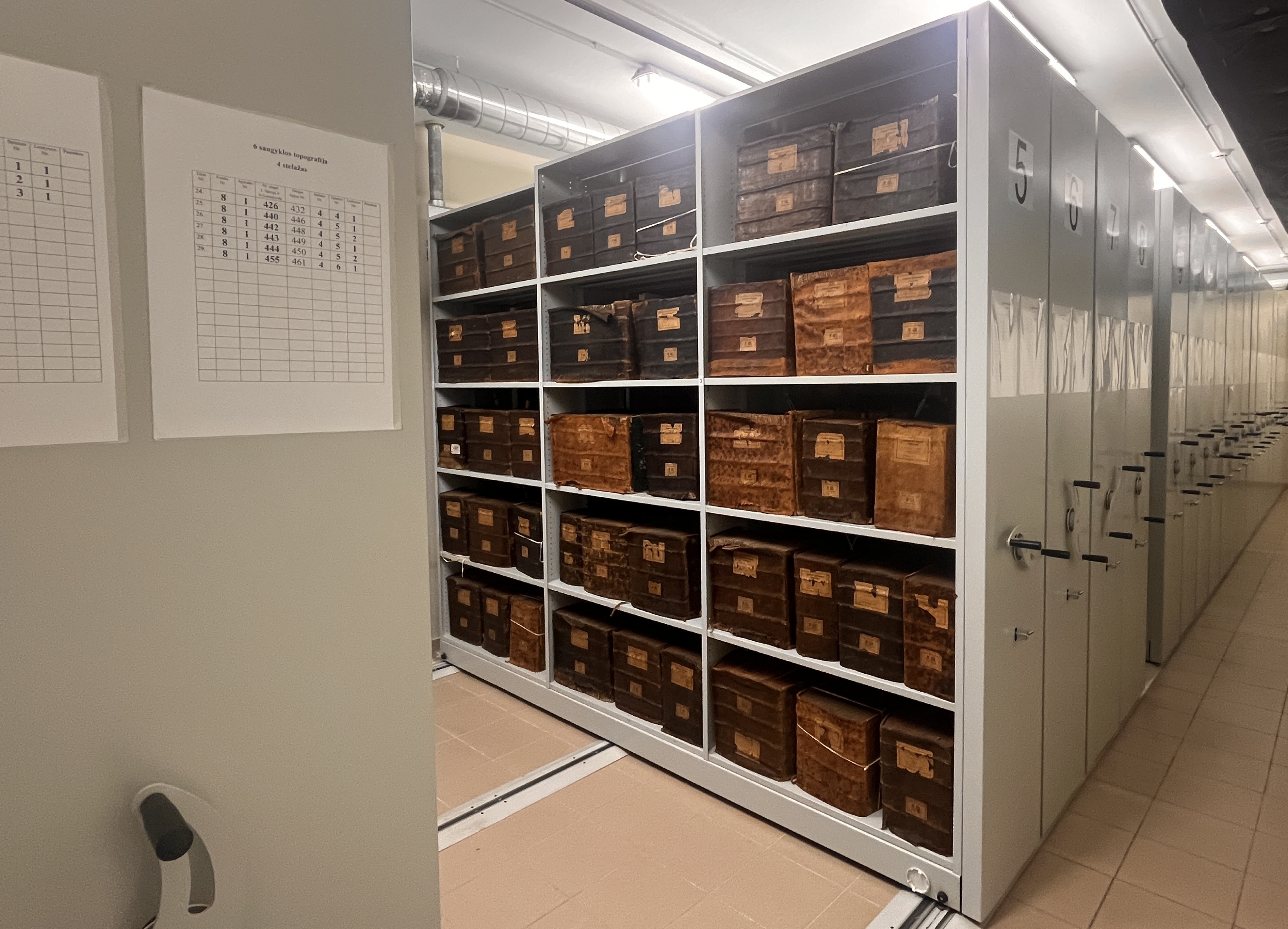
The Lithuanian State Historical Archives is launching a major digitisation project under which, over the next four to five years, it plans to digitise all the files contained in 1,576 inventories across 1,043 archival fonds, amounting to approximately 23 million images.
By comparison, as of July 2026, the Lithuanian State Historical Archives had digitised (since 2013) 31,000 files and uploaded just over 5 million images to the Electronic Archives Information System (EAIS). In total, the Archives holds approximately 1,377,000 files across 3,008 inventories in 1,391 fonds.
The priorities for digitisation in 2026–2027 are fourfold:
a) To digitise all the Old Acts books (court records of the Grand Duchy of Lithuania), numbering almost 16,000 volumes.
b) To complete the digitisation of church register books (records of births, marriages and deaths) of all religious denominations.
c) To digitise all cases concerning the confirmation of noble status (fonds No. 391, 708 and 789).
d) To complete the digitisation of the Vilnius residents' passport card collection (1915–1917; fond No. 641, inventory No. 2), prepare it for scholarly research and make it accessible to the public.
The major digitisation project is being implemented with the support of the organisation FamilySearch, incorporated in Salt Lake City, Utah, USA, which is providing assistance to the Lithuanian State Historical Archives free of charge.
This is already the fifth agreement between the Lithuanian State Historical Archives and FamilySearch. In 1994, 1999 and 2006, agreements on microfilming church register documents were concluded with FamilySearch's predecessor, the Genealogical Society of Utah. In 2015 (extended in 2018), an agreement on digitising documents from various nineteenth-century censuses was concluded directly with FamilySearch.
Agreements of a similar nature, although with less ambitious digitisation targets, have also been concluded between FamilySearch and the national archives of Latvia and Estonia. FamilySearch has provided approximately 80 scanners to help preserve the archives of war-torn Ukraine.
The Nordic countries, particularly Sweden, Denmark and Norway, have maintained significant cooperation with the Genealogical Society of Utah since the twentieth century and continue to work with FamilySearch not only on microfilming and producing digital copies, but also on transcribing and indexing archival records. More recently, their cooperation has increasingly focused on applying artificial intelligence technologies to text recognition and the creation of indexes.
This large-scale digitisation initiative is particularly important for protecting archival documents against destruction and theft by Russia, which poses an existential threat not only to Lithuania's present-day statehood but also to the identity of its population and to historical evidence of Lithuanian statehood.
Priority document collections held by the Lithuanian State Historical Archives have already been removed from Lithuania twice by Russian occupying forces (in 1915 and 1939). Only by a miracle did these collections survive the flames of war and eventually return to Vilnius.
The contents of the digitised files will be stored in the cloud-based Electronic Archives Information System (EAIS) and made available through its digital reading room. They will also be accessible through the FamilySearch portal, which provides free search facilities.
Three FamilySearch scanners, operated by their staff, are currently working at the Archives. Digitisation is also continuing through the Lithuanian State Historical Archives' own Digital Documents Department.
The project is expected to reach its maximum operational capacity in the second half of 2027.
Given the anticipated significant increase in workload, Archives staff will need to prepare files for digitisation. This involves checking and translating file titles into Lithuanian, entering them into the digital records management system, numbering the pages of files and restoring damaged or torn documents.
As a result, some public services provided by the Lithuanian State Historical Archives may be restricted in 2027. Visitors will be informed separately of any such restrictions.
Last updated: 18-11-2026
Related news:
International Exhibition “Martynas Liudvikas Rėza” Opens in Juodkrantė