

Archive of Šv. Jurgis Church in Kėdainiai Preserved and Digitized
The Lithuanian State Historical Archives has completed the inventorying and arrangement of the archive of Šv. Jurgis Church in Kėdainiai. Documents reflecting the church’s history, accumulated over centuries, have been organized, systematized, digitized, and thereby protected from deterioration and loss.
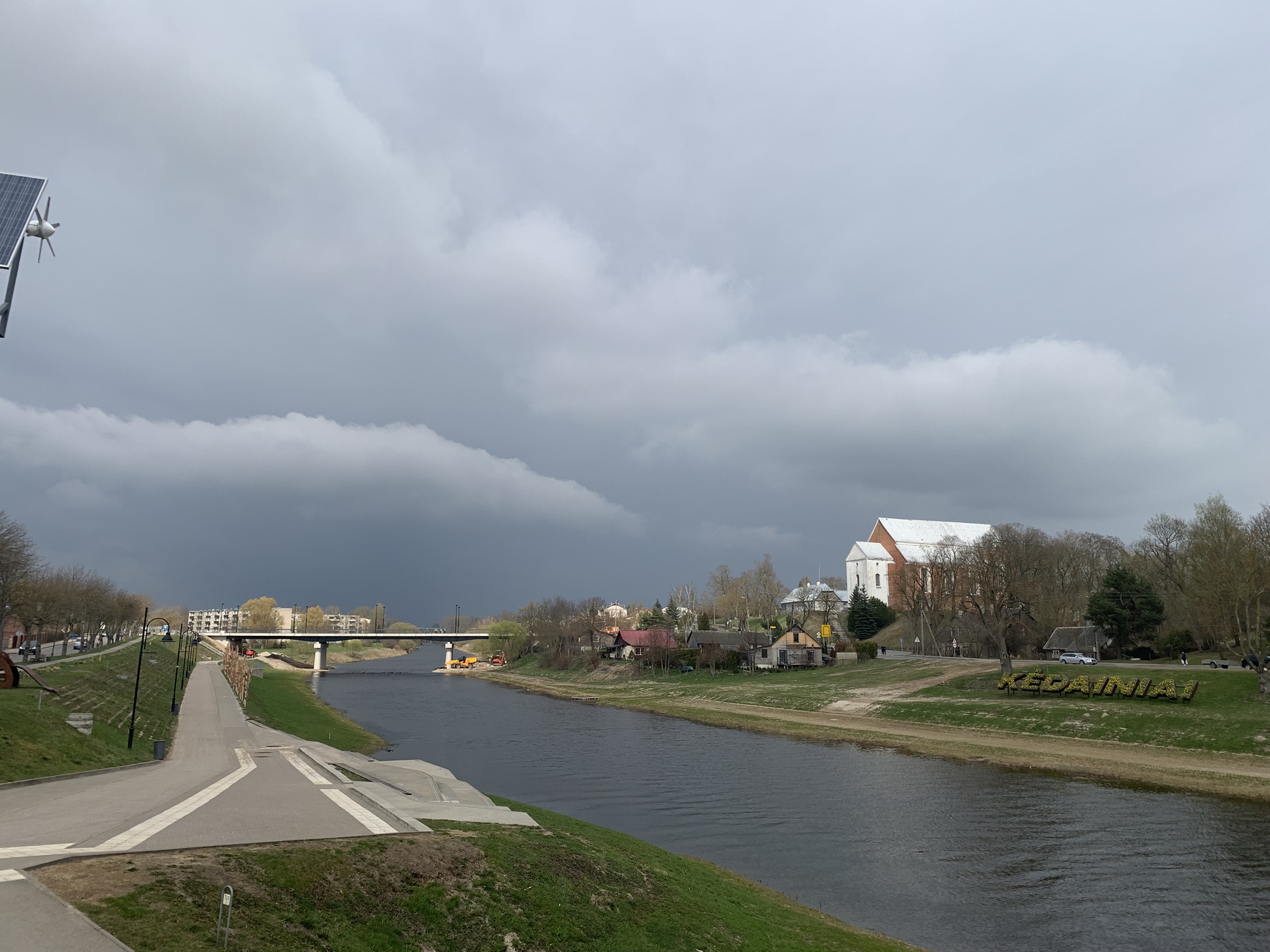
One of the oldest churches in Lithuania, Šv. Jurgis Church in Kėdainiai and its parish are an inseparable part of the city and its history. For centuries, it served as an important religious and community center, and the documents preserved in its archive today provide valuable insight not only into the history of the church but also into the past of the entire Kėdainiai region. Baptismal, marriage, and death registers testify to the histories of many families, while economic records reveal the development of the parish’s and the town’s economic life.
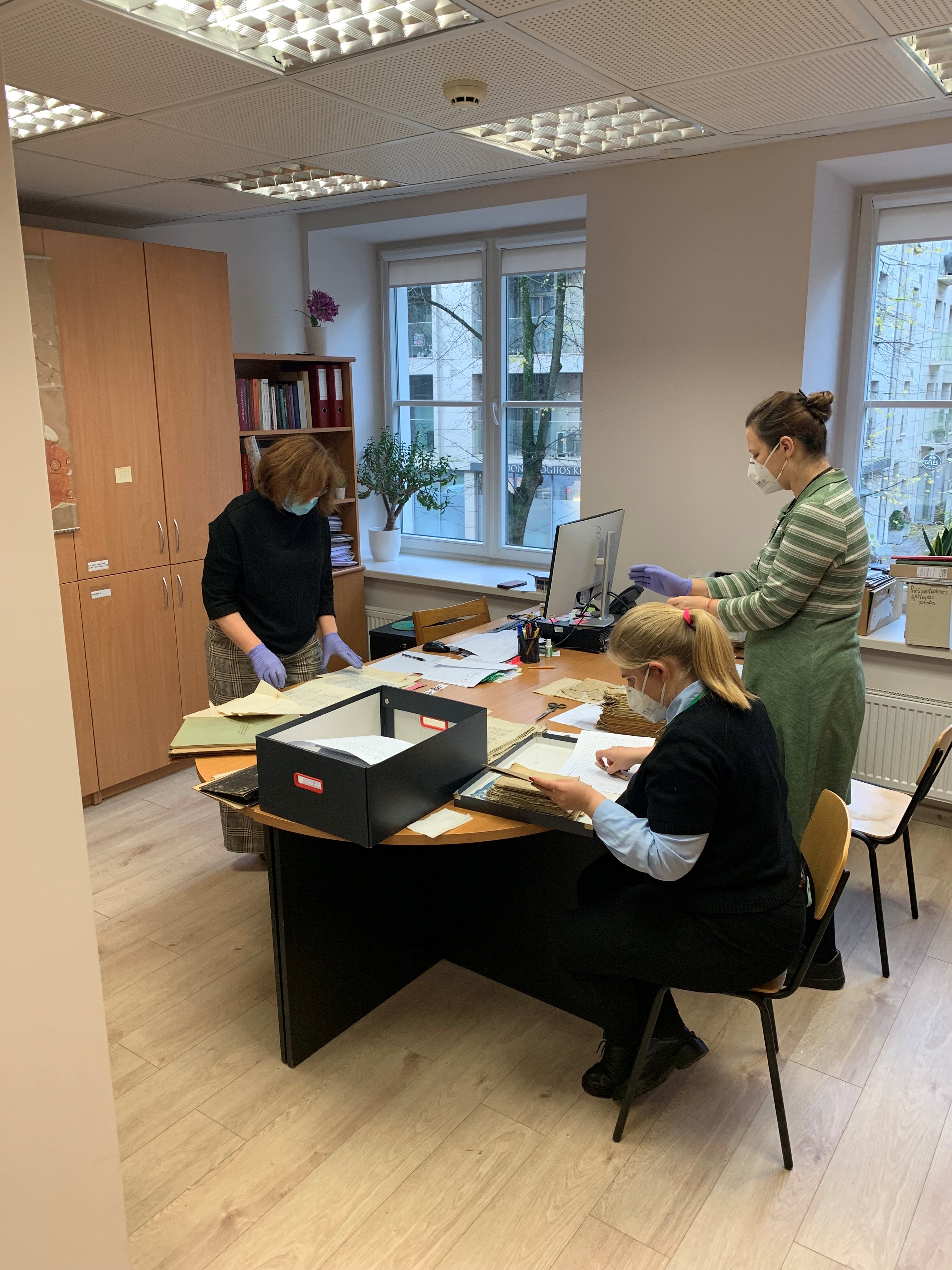
The archival arrangement project of Šv. Jurgis Church in Kėdainiai was carried out in two stages. During the first stage (August 2025 – April 2026), employees of the Lithuanian State Historical Archives, together with representatives of the Šv. Jurgis Church community in Kėdainiai, inspected the church archive premises, church attics, and other possible locations where documents might have been stored. The historically most valuable documents and those requiring the highest level of protection were selected: seventeenth- to nineteenth-century economic documents of the church, as well as baptismal, marriage, and death registers.
%202025.10.30%20K%C4%97daini%C5%B3%20%C5%A1v.%20Jurgio%20ba%C5%BEny%C4%8Dios%20archyvo%20r%C5%AB%C5%A1iavimas%20ir%20apra%C5%A1ymas%20LVIA.jpg)
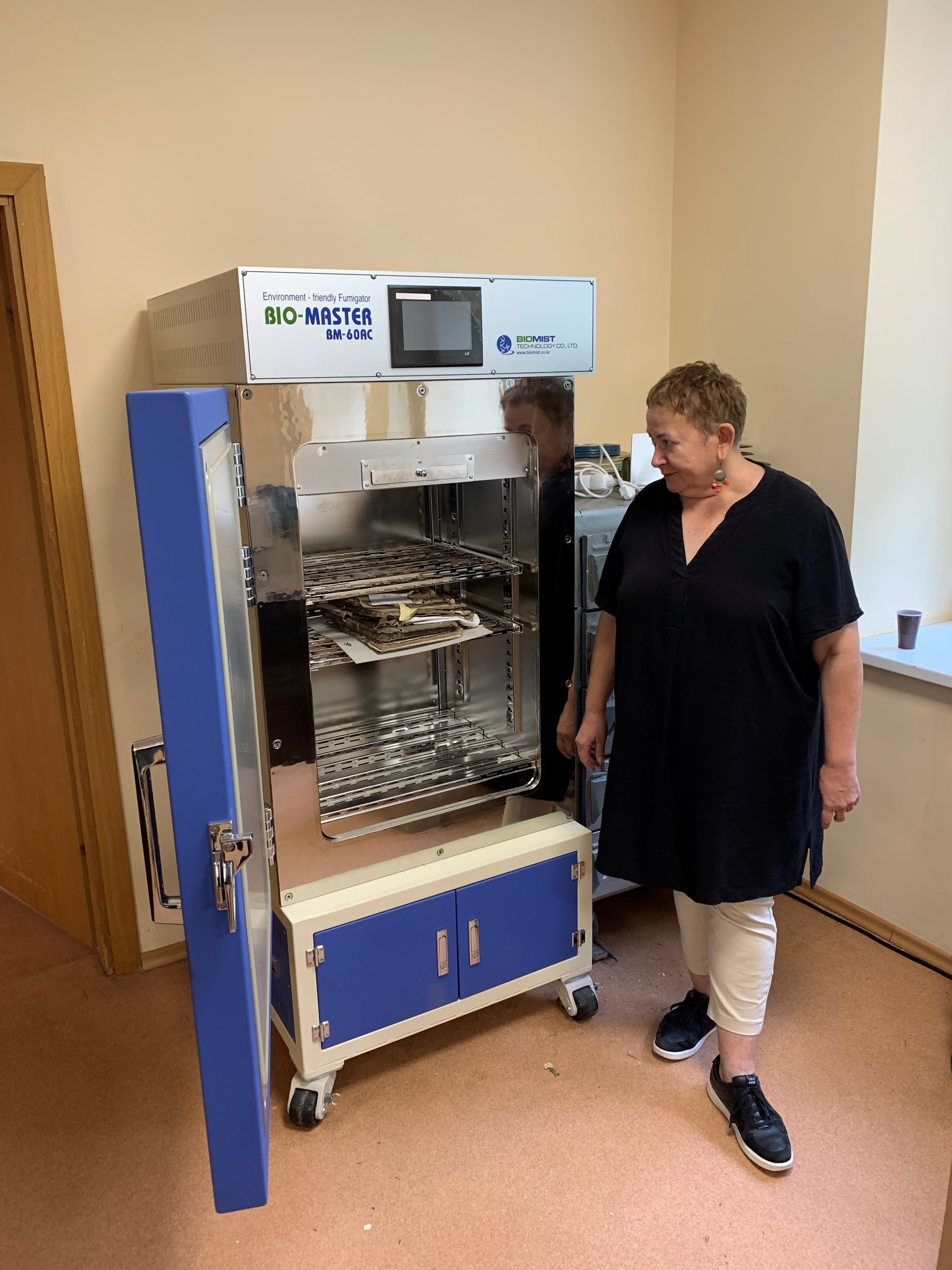
These documents were sorted, classified, and prepared for long-term preservation. Although their condition was initially assessed as relatively good, a more detailed examination revealed signs of biological damage – insects, larvae, and eggs were found in the documents. Therefore, prior to further processing, the entire document collection had to undergo biological decontamination (fumigation) in the specialized chamber of the Lithuanian Central State Archives. Considering the condition of the documents, their historical value, and the need to ensure proper preservation conditions, the entire collection was transferred to the Lithuanian State Historical Archives for permanent storage and registered in Fund No. 1424, Inventory No. 1.
%202025.09.17%20LCVA%20-%20archyvini%C5%B3%20dokument%C5%B3%20biologinis%20nukenksminimas%20(kamera).jpg)
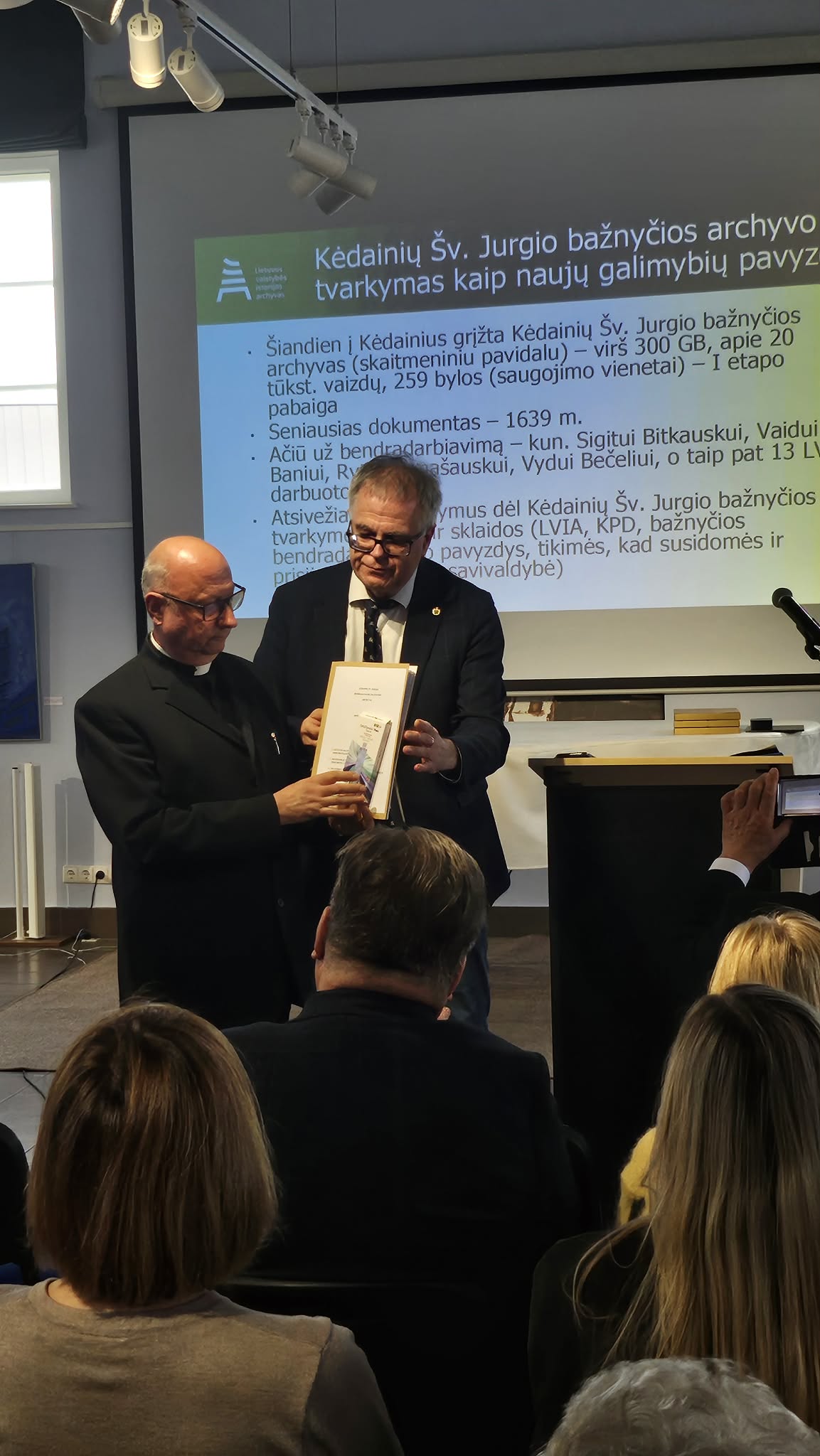
One of the most important results of the first stage was the digitization of the archive of Šv. Jurgis Church in Kėdainiai. During a conference organized by the Cultural Heritage Department under the Ministry of Culture to mark the International Day for Monuments and Sites, held in Kėdainiai on 16 April 2026, a digital copy of this archive was presented to the parish priest of Šv. Jurgis Church, Fr. Sigitas Bitkauskas. The digital copy contains more than 300 GB of data – nearly 20,000 document images in 259 files. Among the digitized documents is the oldest currently known document, dated 1639. The digital files have been uploaded to the Electronic Archives Information System (EAIS), and those not restricted by personal data protection requirements are accessible to the public.
During the second stage of the archival arrangement, in the summer of 2026, specialists from the Lithuanian State Historical Archives, together with the parish priest of Šv. Jurgis Church, Fr. Sigitas Bitkauskas, and members of the parish community, cleaned the archive premises, reviewed, systematized, and described the documents stored there, and compiled an inventory of the preserved documents.
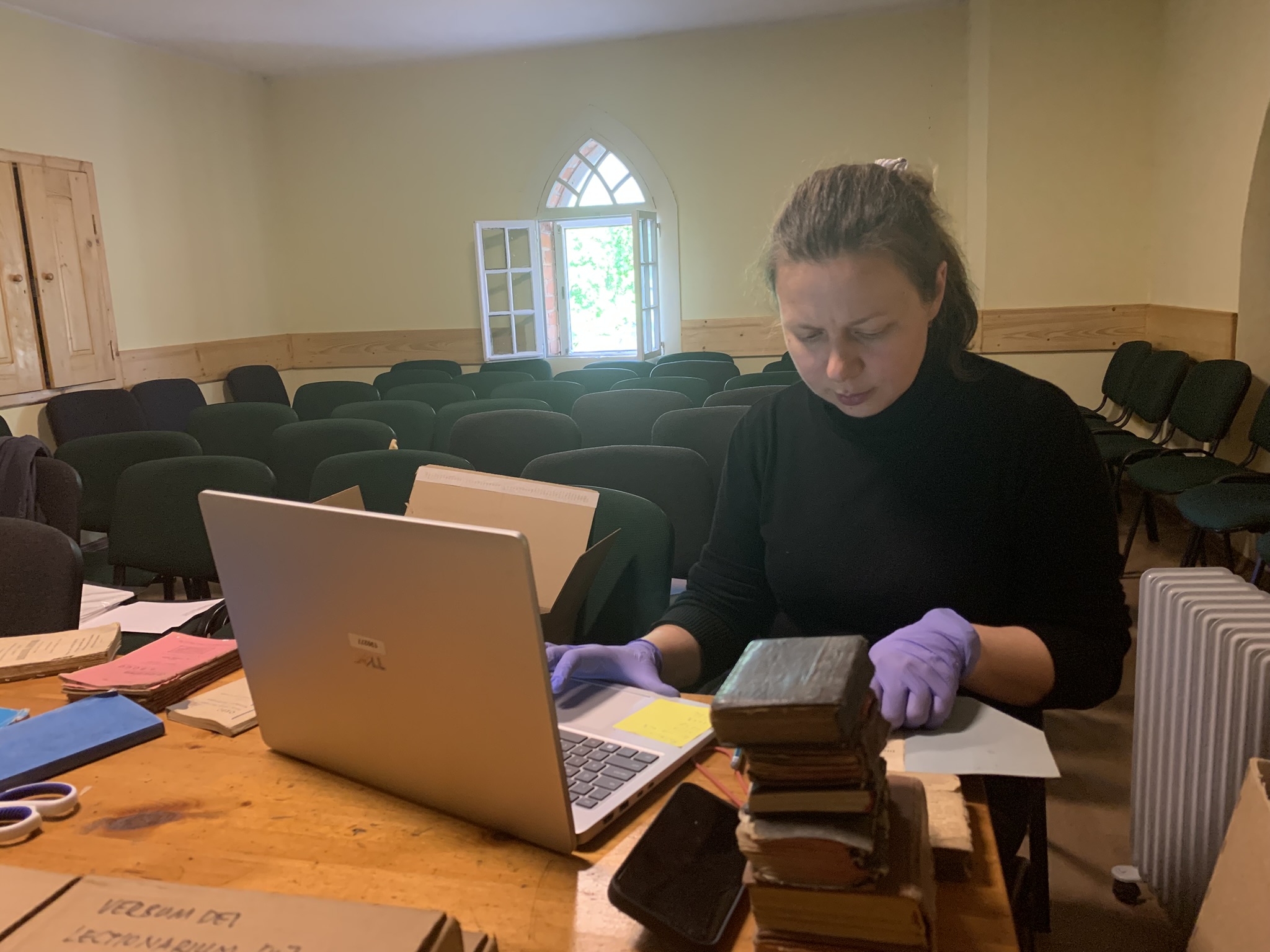
All currently known archival material of Šv. Jurgis Church in Kėdainiai has been registered, and its further preservation has been ensured.
The arrangement of the archive of Šv. Jurgis Church in Kėdainiai is important not only for the preservation of documents but also for nurturing historical memory. The church’s historical memory has been preserved – the organized and digitized documents allow a better understanding and presentation of the parish’s history. The Lithuanian State Historical Archives ensures professional preservation of the documents, their protection from deterioration, and further digitization. Public access to historical sources has been provided – digitized files have been published in the Electronic Archives Information System (EAIS).
The Lithuanian State Historical Archives sincerely thanks Fr. Sigitas Bitkauskas, the parish priest of Šv. Jurgis Church in Kėdainiai, who is moving on to new duties; parishioners Aurimas Budrys and Nedas Juškevičius; Vaidas Banys, employee of the Kėdainiai Regional Museum and Chairman of the Kėdainiai History and Culture Club; club member Rytas Tamašauskas; as well as thirteen colleagues from the Lithuanian State Historical Archives – Rūta Šimulė, Daiva Botyrienė, Jolanta Puodžiūnienė, Ignė Aleksonienė, Inesa Zuzo, Birutė Važgienė, Danutė Abramovienė, Teresa Pečinikova, Dalia Janušauskaitė, Gabija Šimanskaitė, Ana Gžibovska, Viktoras Kotvickis, and Violeta Pansevič – who helped locate, describe, register, and preserve the documents. We thank Danguolė Šlaustienė, Head of the Document Restoration Department of the Lithuanian Central State Archives, for the careful disinfection of the documents. We also thank Vidmantas Bezaras, Director of the Cultural Heritage Department; Valentinas Tamulis, Mayor of Kėdainiai; and Rimantas Žirgulis, Director of the Kėdainiai Regional Museum, for their attention, cooperation, and future plans.
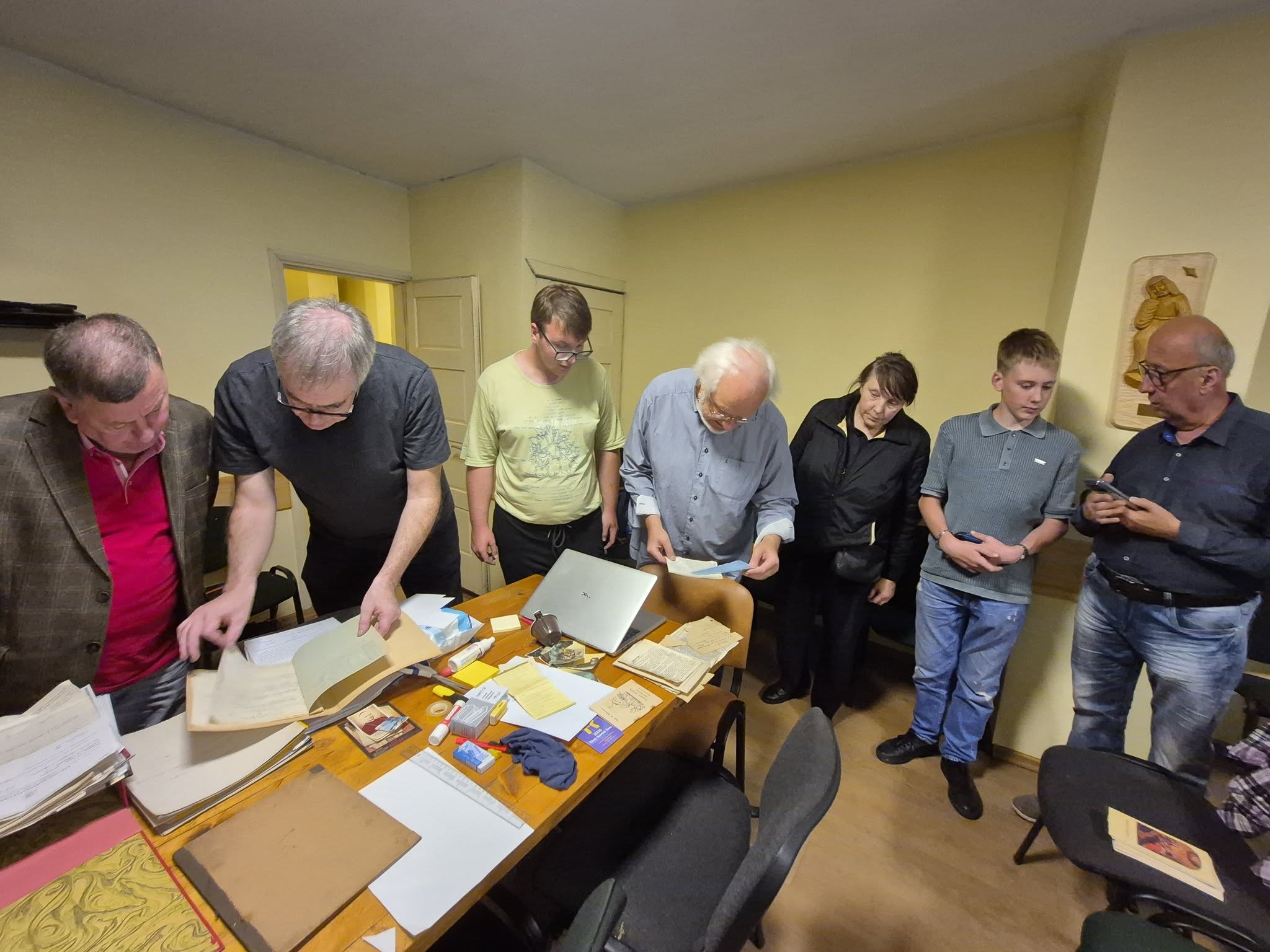
Photo source – the Facebook page of Kėdainiai District Mayor Valentinas Tamulis.
In August 2027, it will be 400 years since Šv. Jurgis Church in Kėdainiai returned to the jurisdiction of the Roman Catholic Church. To commemorate this anniversary and promote a deeper understanding of the history of the region and Lithuania, the Lithuanian State Historical Archives, the Kėdainiai Regional Museum, and the Kėdainiai History and Culture Club, in cooperation with Šv. Jurgis Church and its parish community, the Kėdainiai District Municipality, and the Cultural Heritage Department, are initiating a program for the preservation, research, and dissemination of the heritage of Šv. Jurgis Church. During the annual city festival (Radviliada) in September 2027, they plan to organize an exhibition and a scientific conference dedicated to the history of this church.