

Professional Placement at the National Archives in Krakow
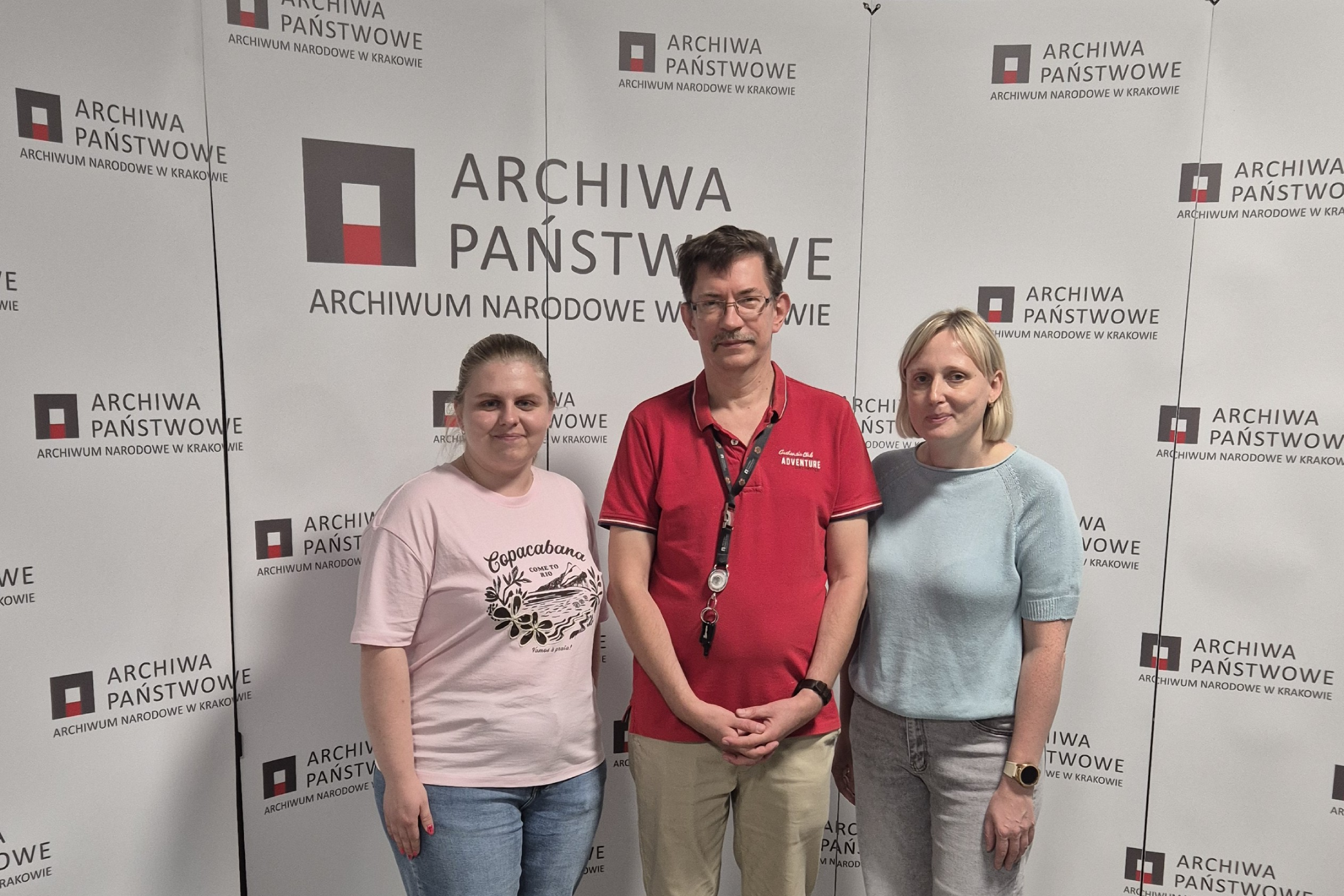
From 17 to 21 August 2026, Violeta Pansevič, Adviser on Scientific Affairs at the Information and Communication Division, and Inesa Zuzo, Chief Archivist, undertook a professional placement at the National Archives in Krakow (Archiwum Narodowe w Krakowie). It is one of the largest and most modern archives not only in Poland but also in Europe.
The Archives moved to its new building complex in the first half of 2021. The complex consists of two main sections: an eight-storey document storage facility, housing approximately 70,000 linear metres of documents, and a six-storey administrative building. The latter contains offices for staff, modern conservation and digitisation workshops, a bookbinding workshop, a 180-seat audiovisual hall, and a multifunctional reading room.
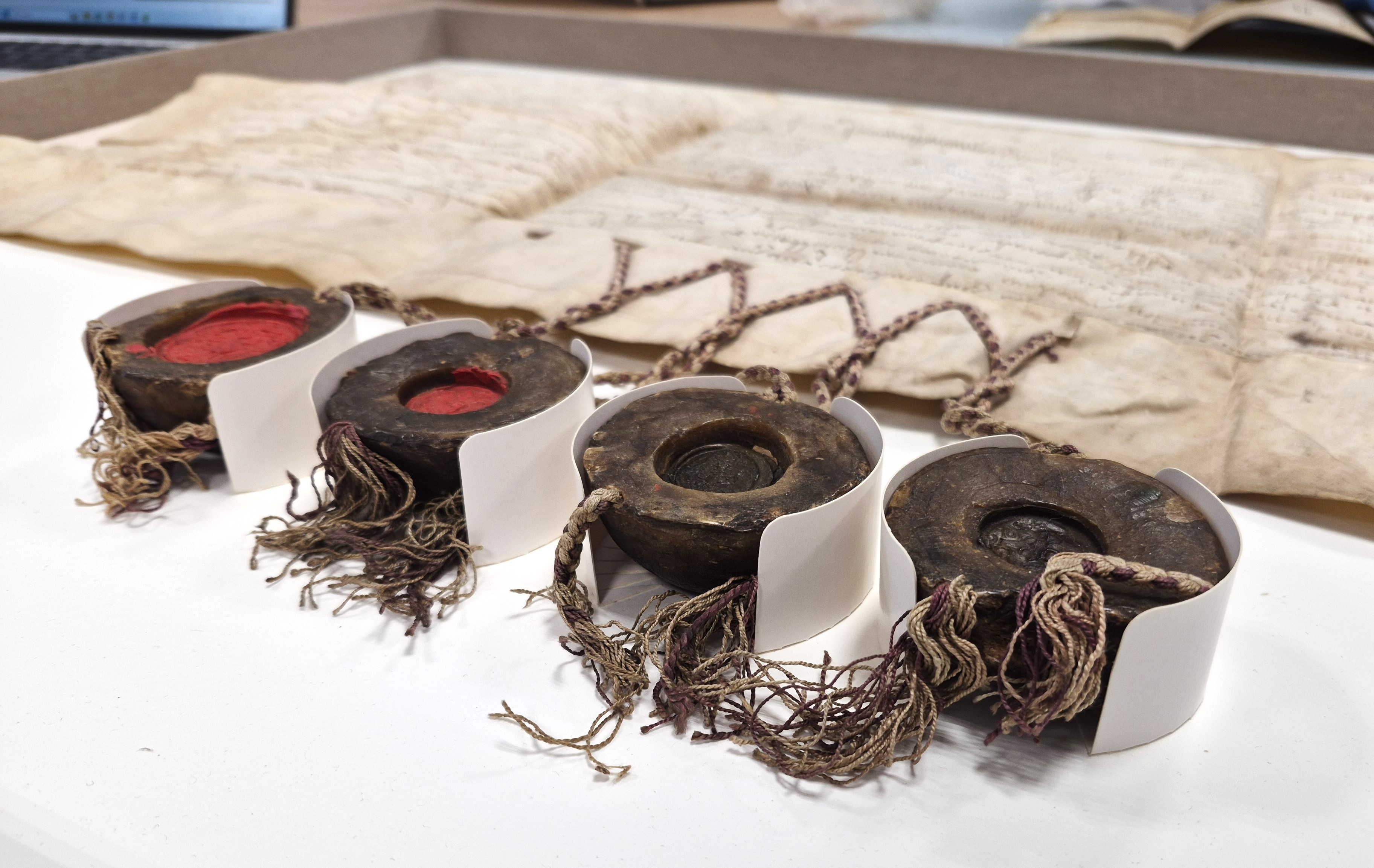
During the placement, the participants gained a deeper understanding of the Archives’ activities and its practices concerning the preservation, arrangement, digitisation, and public accessibility of archival documents. They also conducted a search for documentary heritage of significance to Lithuania. In the course of the research, iconographic materials—including postcards, photographs, and maps—were examined. Particular attention was paid to the collection of seals of the rulers of Poland and the Grand Duchy of Lithuania, early parchments, 19th-century documents of Vilnius University, and other written sources relating to Lithuania.
This year, as Lithuania marks the 150th anniversary of the birth of the renowned Vilnius photographer Jan Bułhak, the research took on an even more focused direction. Materials related to J. Bułhak were examined in the Archives, including postcards, photographs, and press publications from the first half of the 20th century. In order to gain a more comprehensive understanding of the photographer’s work and legacy, the participants also visited the Museum of Photography in Krakow (MuFo), which holds a substantial collection of J. Bułhak’s photographic heritage.
We sincerely thank the staff of the National Archives in Krakow for providing the opportunity to conduct research into documentary heritage of significance to Lithuania and to explore the materials preserved in the Archives. We extend our special thanks to Dr Iwona Pietrzkiewicz for the enriching introduction to the city of Krakow.